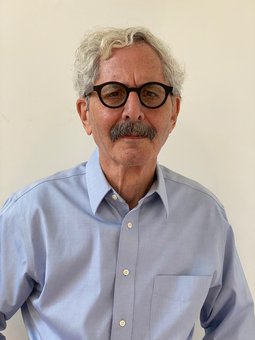
Paul Goldsmith
Address:
4800 Oak Grove Drive
M/S 180-703
Phone:
818.393.0518Fax:
818.393.6546Curriculum Vitae:
Click hereMember of:
Structure of the UniverseGroup Supervisor
Biography
Dr. Paul Goldsmith is the Group Supervisor for 3266 – Structure of the Universe. His recent work has focused on observations of far-infrared fine structure lines to determine the complete structure of molecular clouds associated with star formation. He is also investigating use of HD to trace the mass of protoplanetary disks and to explore the structure of dense cores in molecular clouds and their connection with planetary systems. He has worked on determining time scales of cloud formation by using atomic hydrogen in molecular clouds as a tracer of their evolution and history. He has also been studying the impact of star formation on surrounding molecular cloud material via changes in abundances, heating of dust and gas, and other effects. He is actively involved in the development of novel submillimeter antennas made via Additive Manufacturing, and technology for high resolution submillimeter and far-infrared spectroscopy.
Education
- A.B., University of California, Berkeley, 1969
- Ph.D., University of California, Berkeley, 1975
Professional Experience
- JPL-Caltech Technology Liaison (2016-Present)
- Supervisor, Group 3266 - Structure of the Universe (2015-Present)
- Adjunct Professor of Astronomy, University of Arizona, Tucson (2009-Present)
- Chief Technologist, Astronomy and Physics Directorate, Jet Propulsion Laboratory (2008-2015)
- Senior Research Scientist, Jet Propulsion Laboratory (2006-Present)
- Visiting Associate, Department of Astronomy, Calif. Inst. Technology, Pasadena
- Supervisor, Group 3266, Evolution of Galaxies (2006-2008)
- Principal Scientist, Jet Propulsion Laboratory, Calif. Inst. Technology, Pasadena (2005-2006)
- Professor Emeritus of Astronomy, Cornell University (2005-Present)
- Professeur Invité, Ecole Normale Supérieure, Paris, France (2000, 2001, 2004)
- James Weeks Professor in the Physical Sciences, Department of Astronomy, Cornell University (1999-2005)
- Director, National Astronomy and Ionosphere Center (1993-2002)
- Professor, Department of Astronomy, Cornell University (1993-2005)
- Professor, Dept. of Physics & Astronomy, Univ. of Massachusetts, Amherst (1986-1992)
- Vice President of Research and Development, Millitech Corporation (1982-1992)
- Associate Director, Five College Radio Astronomy Observatory (1980-1992)
Research Interests
Dr. Goldsmith's areas of interest in astronomy include unraveling the structure of molecular clouds and understanding how star formation occurs within them. This has led to developing techniques for probing the densities, temperatures, and other physical conditions in these regions. He will be using the JWST to study molecular hydrogen emission from molecular cloud boundaries. In addition to carrying out ground-based and airborne observations, he was a co-investigator with the Submillimeter Wave Astronomy Satellite (SWAS), studying water, atomic carbon, molecular oxygen, and carbon monoxide. Goldsmith was the PI on the Herschel Oxygen Project, which has made the first multi-transition detection of this species in interstellar space. Goldsmith is working with colleagues at JPL interpreting data from the fine structure line of ionized carbon and nitrogen, and atomic oxygen. He has been involved in modeling the collisional excitation and radiative transfer of these fine structure lines. He is also pursuing large-scale surveys of the structure lines with GUSTO and ASTHROS balloon missions. Goldsmith has an ongoing interest in astronomical instrumentation, especially high-sensitivity systems at centimeter to submillimeter wavelengths. He has also been actively involved in development of focal plane array receivers for radio and submillimeter telescopes. He has worked on the optical design of multiobject spectrometer systems for the CCAT telescope and has participated in a number of proposals for array receivers for submillimeter fine structure lines on balloons and SOFIA.
Selected Awards
- NASA Exceptional Scientific Achievement Medal (2020)
- Kenneth J. Button Prize, International Society of Infrared, Millimeter, and Infrared Waves (2020)
- Edward Stone Award for Outstanding Research Publication (2012)
- NASA Exceptional Scientific Achievement Medal (2012)
- NASA Group Achievement Award (2010)
- NASA Exceptional Achievement Medal (2010)
- James Weeks Professor in the Physical Sciences, Cornell University (1999)
- IEEE Microwave Theory & Techniques Society - Distinguished Lecturer (1992)
- Fellow, Institute of Electrical and Electronics Engineers (1991)
Selected Publications
- “Collisional Excitation of Carbon Monoxide in Interstellar Clouds,” Goldsmith, P.F., Ap.J., 176, 597, 1972.
- “A Quasioptical Feed System for Radioastronomical Observations at Mil- limeter Wavelengths, Goldsmith, P.F., B.S.T.J., 56, 1483, 1977.
- “Molecular Cooling and Thermal Balance of Dense Interstellar Clouds,” Goldsmith, P.F. and Langer, W.D., Ap.J., 222, 881, 1978.
- “Detection of the J = 6–5 Transition of Carbon Monoxide,” Goldsmith, P.F., Erickson, N.R., Fetterman, H.R., Clifton, B.J., Peck, D.D., Tannenwald, P.E., Koepf, G.A., Buhl, D., and McAvoy, N., Ap.J.(Lett.), 243, L79, 1981.
- “Coupling of the Magnetic Field and Rotation in the Dark Cloud B5,” Young, J.S., Langer, W.D., Goldsmith, P.F., and Wilson, R.W., Ap.J.(Lett.), 251, L81, 1981.
- “Vibrationally Excited Cyanoacetylene in the Orion Molecular Cloud,” Goldsmith, P.F., Snell, R.L., Deguchi, S., and Krotkov, R., Ap.J., 260, 147, 1982.
- “Detection of Bipolar CO Outflow in Orion,” Erickson, N.R., Goldsmith, P.F., Snell, R.L., Berson, R.L., Huguenin, G.R., Ulich, B.L., and Lada, C.J., Ap.J.(Lett.), 261, L103, 1982.
- “Models of Molecular Clouds: I. Multitransition Study of CS,” Snell, R.L., Mundy, L.G., Goldsmith, P.F., Evans, N.J. II, and Erickson, N.R., Ap.J., 276, 625, 1984.
- “Bipolar Outflows in Dark Clouds,” Goldsmith, P.F., Snell, R.L., Hemeon- Heyer, M., and Langer, W.D.,” Ap.J., 286, 599, 1984.
- “A Detailed Examination of the Kinematics of Rotating Clouds,” Arquilla R. and Goldsmith, P.F., Ap.J., 303, 356, 1986.
- “1300 Micron Continuum Observations of the Sagittarius B2 Molecular Cloud Core,” Goldsmith, P.F., Snell, R.L., and Lis, D.C., Ap.J., 313, L5, 1987.
- “The Smoothness of CO Line Profiles in Orion: Implications for Clumpi- ness,” Tauber, J.A., Goldsmith, P.F., and Dickman, R.L., Ap.J., 375, 635, 1991.
- “A 15 Element Focal Plane Array for 100 GHz,” Erickson, N.R., Goldsmith, P.F., Novak, G., Grosslein, R.N., Viscuso, P.J., Erickson, R.B., and Predmore, C.R., IEEE Trans. Microwave Theory Tech., MTT-40, 1, 1992.
- “Origin and Evolution of the Cepheus Bubble,” Patel, N.A., Goldsmith, P.F., Heyer, M.H., and Snell, R.L., Ap.J., 507, 241, 1998.
- “Population Diagram Analysis of Molecular Line Emission,” Goldsmith, P.F. and Langer, W.D. Ap.J., 517,209, 1999.
- “Implications of Submillimeter Wave Astronomy Satellite Observations for Interstellar Chemistry and Star Formation,” Bergin, E.A., Melnick, G., Stauf- fer, J.R, Ashby, M.L.N., Chin, G., Erickson, N.R., Goldsmith, P.F., Harwit, M., Howe, J.E., Kleiner, S.C., Koch, D.G., Neufeld, D.A., Patten, B.M., Plume, R., Schieder, R., Snell, R.L., Tolls, V., Wang, Z., Winnewisser, G., and Zhang, Y.F., Ap,J., 539, L129, 2000.
- “Molecular Depletion and Thermal Balance in Dark Cloud Cores,” Gold- smith, P.F. 2001, ApJ, 557, 736.
- “The Transition From Atomic to Molecular Hydrogen in Interstellar Clouds: 21cm Signature of the Evolution of Cold Atomic Hydrogen in Dense Clouds,” Goldsmith, P.F., Li, D., & Krˇco, M. 2007, ApJ, 654, 273.
- “Large–Scale Structure of the Molecular Gas in Taurus Revealed by High Linear Dynamic Range Spectral Line Mapping,” Goldsmith, P.F., Heyer, M., Narayanan, G., Snell, R., Li, D., & Brunt, C., 2008, ApJ, 680, 428.
- “Herschel Measurements of Molecular Oxygen in Orion,” Goldsmith, P.F., Liseau, R., Bell, T.A., Black, J. H., Chen, J.-H., Hollenbach, D., Kaufman, M.J., Li, D., Lis, D.C., Melnick, G., Neufeld, D., Pagani, L., Snell, R., Benz, A.O., Bergin, E., Bruderer, S., Caselli, P., Caux, E., Encrenaz, P., Falgarone, E., Gerin, M., Goicoechea, J.R., Hjalmarson, A., Larsson, B., Le Bourlot, J., Le Petit, F., De Luca, M., Nagy, Z., Roueff, E., Sandqvist, A., van der Tak, F., van Dishoeck, E.F., Vastel, C., Viti, S., & Yildiz, U. 2011, ApJ, 737, 96.
- “Collisional Excitation of the [CII] Fine Structure Transition in Interstellar Clouds,” Goldsmith, P.F., Langer, W.D., Pineda, J.L., & Velusamy, T. 2012, ApJS 203, 13.
- “Water Absorption in Galactic Translucent clouds: Conditions and History of the Gas Derived from Herschel/HIFI PRISMAS Observations,” Flagey, N., Goldsmith, P.F., Lis, D.C., Gerin, M., Neufeld, D., Sonnentrucker, P., De Luca, M., Godard, B., Goicoechea, J.R., Monje, R., & Phillips, T.G. 2012, ApJ, 762, 11.
- “A Herschel [CII] Galactic Plane Survey I. The Global Distribution of ISM Gas Components,” Pineda, J.L., Langer, W.D., Velusamy, T., & Goldsmith, P.F. 2013, Astron. Astrophys., 554, A103.
- “Herschel Galactic Plane Survey of [NII] Fine Structure Emission,” Goldsmith, P.F., Yildiz, U., Langer, W.D., & Pineda, J.L. 2015, ApJ, 814,1 133.
- “Striations in the Taurus Molecular Cloud: Kelvin-Helmholtz Instability or MHD Waves?,” Heyer, M.H., Goldsmith, P.F., Yildiz, U.A., Snell, R.L., Falgar- one, E., & Pineda, J.L. 2016, MNRAS, 461, 3918.
- “Sub–Millimeter Heterodyne Focal–Plane Arrays for High-Resolution Astro- nomical Spectroscopy,” Goldsmith, P. 2017, The Radio Science Bulletin, 362, 53.
- “Catching the Birth of a Dark Molecular Cloud for the First Time,” Zuo, P., Li, D., Peek, J. E. G., Chang, Q., Zhang, X., Chapman, N., Goldsmith, P. F., & Zhang, Z.-Y. 2018, ApJ, 867,13.
- “A Spherical Aberration Corrective Lens for Centimeter Through Submil- limeter Wavelength Antennas,” Goldsmith, P.F. & Alonso-DelPino, A. 2018, IEEE Antennas and Wireless Propag. Lett., 17, 2228.
- “Modeling Collisional Excitation of [OI] Fine Structure Line Emission from PDRs: I. Homogeneous Clouds,” Goldsmith, P.F. 2019, Ap.J., 887, 54.
- “Interstellar Cloud Conditions Based on 63 µm [OI] Emission and Absorp- tion in W3,” Goldsmith, P.F., Seo, Y., Pineda, J., Stutzki, J., Guevara, C., Aladro, R., & Justen, M., 2021, ApJ, 916:6.
- “Probing Polarization and the Role of Magnetic Fields in Cloud Destruction in the Keyhole Nebula,” Seo, Y.M., Dowell, C.D., Goldsmith, P.F., Pineda, J.L., & Majumdar, L. 2021, ApJ, 917,57.
- “Searching for Converging Flows of Atomic Gas Onto a Molecular Cloud,” Heyer, M., Goldsmith, P.F., Simon, R., Aladrao, R., & Ricken, O. 2022, ApJ, 941:62
- “Atomic Oxygen Abundance Towards Sagittarius B2,” Lis, D.C., Goldsmith P.F., Gu¨sten, R., Schilke, P., Wiesemeyer, H., Seo, Y., & Werner, M.W. 2023, A&A, 669, L15.
- “First Detection of Radio Recombination Lines of Ions Heavier than He- lium,” Liu, X., Liu, T., Shen, Z., Goldsmith, P.F., Evans, N.J., and 31 other authors, 2023, A&A, 671, L1.
- “Discovery of a New Molecular Bubble –Outflow Structure in the Taurus B18 Cloud,” Duan, Y., Li, D., Goldsmith, P.F., Pagani, L., Ching, T.-C., Liu, S., Xie, J., & Wang, C., 2023, ApJ, 943, 182.