321B - Atmospheric Dynamics
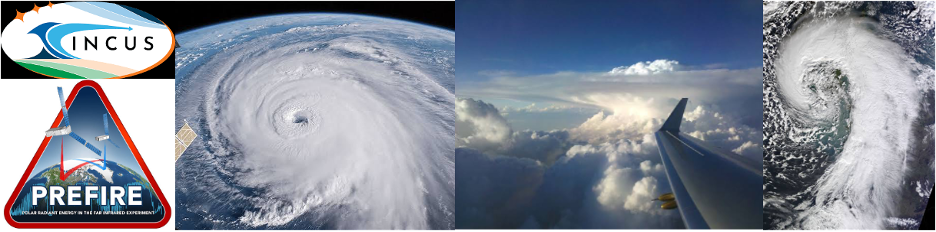
The Atmospheric Dynamics Group conducts research, designs missions, and assists decision makers in the area of processes and phenomena related to moist thermodynamics and the hydrologic cycle in the atmosphere. Focus areas range from small-scale processes such as convection, clouds and precipitation to large-scale phenomena such as tropical cyclones, severe storms, atmospheric rivers, and global-scale phenomena such as the Madden-Julian Oscillation, ENSO, and monsoons.
We use:
- Space-based, airborne, ground based observations
- Multi-scale models
- Statistical techniques
to address the following questions:
- How do Earth's dynamic weather systems form and evolve?
- How does the temperature, water vapor, and wind structure of the atmosphere change with time and location?
- How do regional weather processes interact with their larger-scale thermodynamic and dynamic environment?
- What controls the intensity, distribution and likelihood of storms, and how can we use satellite observations to improve modeling and prediction of high impact weather events?
- How well do models that span fine to coarse scales compare to observations, and how can we use global satellite observations to improve models?
- How can we optimize the design of new observing systems to improve our understanding of dynamic weather systems?