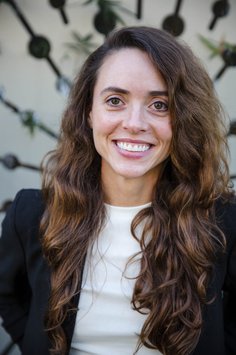
Madeleine Pascolini-Campbell
Address:
4800 Oak Grove Drive
M/S 300-331
Curriculum Vitae:
Click hereWebsite:
Click hereMember of:
Water & EcosystemsScientist
Biography
My research focuses on science applications including: predicting and assessing recovery from wildfires, agricultural water use, drought stress, extreme events, and large-scale water cycle changes. I work with remote sensing observations from spaceborne and airborne platforms, in situ observations, and model data. I also lead evapotranspiration algorithm development for the NASA HyTES and MASTER airborne thermal infrared sensors. I work as co-Lead for Science Applications for the ECOSTRESS thermal mission.
Education
- 2018 PhD, Columbia University
- BA 2011, Cambridge University
Professional Experience
- 2021 – present: Scientist, NASA Jet Propulsion Laboratory, Pasadena, CA
- 2020 – 2021: JPL Postdoc, NASA Jet Propulsion Laboratory, Pasadena, CA
- 2018 – 2020: NASA Postdoctoral Program (NPP), NASA Jet Propulsion Laboratory, Pasadena, CA
- 2013 – 2018: Graduate Researcher, Columbia University, New York, NY
Research Interests
- Predicting and assessing recovery of wildfires using remote sensing with machine learning
- Agriculture water use, irrigation, and water optimization
- Evapotranspiration modeling and validation
Selected Awards
- 2024 NASA Early Career Achievement Medal
- 2022 NASA Wildland Fires Program
- 2022 ECOSTRESS Science and Applications Science Team
- 2022 NASA Wildland Fires Program Science Team
- 2018 NASA Postdoctoral Program (NPP) Award
- 2015 National Science Foundation Graduate Research Fellowship Program
Selected Publications
- Pascolini-Campbell, M., Wang, J., French, N., Aalto, J., Allison, K., Baijnath-Rodino, J. A., ... & Yebra, M. (2026). Wildland Fire Science and Applications for NASA’s 2028–2037 Decadal. https://essopenarchive.org/doi/abs/10.22541/essoar.15007598/v2
- Ward-Baranyay, M., Lee, C., Pascolini-Campbell, M., Sousa, D., & Kinoshita, A. M. (2026). Pre-Fire Fuel Conditions Are Dominant Drivers of Burn Severity in 2025 LA County Fires. Accepted March 2026, AGU Advances, Preprint: https://essopenarchive.org/doi/pdf/10.22541/essoar.176244866.66630790/v1
- Pascolini-Campbell, M., Fisher, J. B., Hall, J. V., Rivera, M., Lee, C. M., Thompson, J. O., ... & Baijnath-Rodino, J. (2026). Wildfires: TIR for Monitoring Active Fires, Pre-Fire Fuels, and Post-Fire Recovery. In High Spatio-Temporal-Spectral Thermal Remote Sensing (pp. 109-127). CRC Press. Book available online.
- Pascolini-Campbell, M., Fisher, J. B., Cawse-Nicholson, K., Lee, C. M., & Stavros, N. (2025). Assessment of spatial autocorrelation and scalability in fine-scale wildfire random forest prediction models. Scientific Reports, 15(1), 21504. https://doi.org/10.1038/s41598-025-06814-z
- Pierrat, Z. A., Purdy, A. J., Halverson, G., Fisher, J. B., Mallick, K., Pascolini‐Campbell, M., ... & Cawse‐Nicholson, K. (2025). Evaluation of ECOSTRESS Collection 2 evapotranspiration products: Strengths and uncertainties for evapotranspiration modeling. Water Resources Research, 61(6), e2024WR039404. https://doi.org/10.1029/2024WR039404
- M. Pascolini-Campbell, Hook, S., Mallick, K., Langsdale, M., Hulley, G., Cawse-Nicholson, K., Hu, T., Halverson, G., Freepartner, R., Rivera, G., Genesio, L. and Rabuffi, F. (2024) “A First Assessment of Airborne HyTES-based Land Surface. Temperature and Evapotranspiration”, Remote Sensing Applications Society and Environment, 36, 101344. https://doi.org/10.1016/j.rsase.2024.101344
- Parazoo, N. C., Osman, M., Pascolini-Campbell, M., & Byrne, B. (2024). Antecedent Conditions Mitigate Carbon Loss During Flash Drought Events. Geophysical Research Letters, 51(8), e2024GL108310. https://doi.org/10.1029/2024GL108310
- Boser, A., Caylor, K., Larsen, A., Pascolini-Campbell, M., Reager, J. T., Carleton, T. Field-scale crop water consumption estimates reveal potential water savings in California agriculture, 2024, Nature Communications, 15(1), 2366. https://doi.org/10.1038/s41467-024-46031-2
- Simafranca, N., Willoughby, B., O’Neil, E. Farr, S., Reich, B. J., Giertych, N., Johnson, M., Pascolini-Campbell, M. (2024), Modelling wildland fire burn severity in California using a spatial super learner approach, 2024, Environmental and Ecological Statistics,
https://doi.org/10.48550/arXiv.2311.16187 - M. Pascolini-Campbell and J. T. Reager, An Investigation of the spatial and temporal characteristics of dry and wet extreme events across NLDAS-2 models, 2023, Journal of Hydrometeorology, https://doi.org/10.1175/JHM-D-23-0038.1
- Pascolini-Campbell, M. Soil and plants lose more water under drought. Nature Climate Change – News and Views (2022). https://doi.org/10.1038/s41558-022-01510-6
- Pascolini-Campbell, M., Lee, C., Stavros, N. & Fisher, J. B. (2022). ECOSTRESS reveals pre-fire vegetation controls on burn severity for Southern California wildfires of 2020. Global Ecology and Biogeography, 31, 1976– 1989. https://doi.org/10.1111/geb.13526
- Pascolini‐Campbell, M., Fisher, J. B. & J. T. Reager “GRACE-ECOSTRESS synergies constrain fine-scale impacts on large-scale water balance”, 2021, Geophysical Research Letters, 48(15), e2021GL093984. DOI: 10.1029/2021GL093984