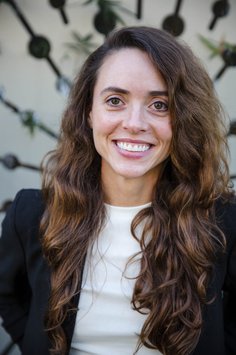
Madeleine Pascolini-Campbell
Address:
4800 Oak Grove Drive
M/S 300-331
Curriculum Vitae:
Click hereWebsite:
Click hereMember of:
Water & EcosystemsScientist
Biography
My research focuses on science applications for wildfires (pre-fire prediction and monitoring, and post fire vegetation recovery), agriculture, and large-scale water cycle changes. My research uses in situ observations, thermal remote sensing data including ECOSTRESS and HyTES. I am the current science applications lead for the ECOSTRESS mission.
Education
- 2018 PhD Climate Science, Columbia University
- BA 2011 Geography, Cambridge University
Professional Experience
- 2021 – present: Scientist, NASA Jet Propulsion Laboratory, Pasadena, CA
- 2020 – 2021: JPL Postdoc, NASA Jet Propulsion Laboratory, Pasadena, CA
- 2018 – 2020: NASA Postdoctoral Program (NPP), NASA Jet Propulsion Laboratory, Pasadena, CA
- 2013 – 2018: Graduate Researcher, Columbia University, New York, NY
Research Interests
- Monitoring and predicting wildfire
- Post-wildfire impacts on water and ecosystems
- Agriculture water use
Selected Awards
- 2024 NASA Early Career Achievement Medal
- 2022 NASA Wildland Fires Program
- 2022 ECOSTRESS Science and Applications Science Team
- 2022 NASA Wildland Fires Program Science Team
- 2018 NASA Postdoctoral Program (NPP) Award
- 2015 National Science Foundation Graduate Research Fellowship Program
Selected Publications
- Ward-Baranyay, M., Lee, C., Pascolini-Campbell, M., Sousa, D., & Kinoshita, A. M. (2025). Pre-Fire Fuel Conditions Are Dominant Drivers of Burn Severity in 2025 LA County Fires. Authorea Preprints. Under Review at AGU Advances
- Alamillo, A., Li, J., Farahmand, A., Pascolini-Campbell, M., & Lee, C. (2025). Post-Fire Vegetation Recovery Response: A Case Study of the 2020 Bobcat Fire in Los Angeles, California. Remote Sensing, 17(24), 4023.
- Pascolini-Campbell, M., Fisher, J. B., Cawse-Nicholson, K., Lee, C. M., & Stavros, N. (2025). Assessment of spatial autocorrelation and scalability in fine-scale wildfire random forest prediction models. Scientific Reports, 15(1), 21504.
- Joshi, R., Jensen, A., Pascolini-Campbell, M. and J. B. Fisher Coupling between evapotranspiration, water use efficiency, and evaporative stress index strengthens after wildfires in New Mexico, USA, (2024) International Journal of Applied Earth Observation and Geoinformation, 135, 104238.
- Jarugula, S., Fournier, S., Reager, J. T., & Pascolini-Campbell, M. (2025). Intercomparison of in situ and satellite sea surface salinity products for global coastal ocean studies. Journal of Atmospheric and Oceanic Technology, 42(1), 3-16.
- Pierrat, Z. A., Purdy, A. J., Halverson, G., Fisher, J. B., Mallick, K., Pascolini‐Campbell, M., ... & Cawse‐Nicholson, K. (2025). Evaluation of ECOSTRESS Collection 2 evapotranspiration products: Strengths and uncertainties for evapotranspiration modeling. Water Resources Research, 61(6), e2024WR039404.
- Byrne, B., Liu, J., Bowman, K., Pascolini-Campbell, M., Chatterjee, A., Pandey, S., Miyazaki, K., van der Werf, G., Wunch, D., Wennberg, P., Roehl, C. and S. Sinha, Carbon emissions from the 2023 Canadian wildfires, Nature (2024). https://doi.org/10.1038/s41586-024-07878-z
- Parazoo, N. C., Osman, M., Pascolini-Campbell, M., & Byrne, B. (2024). Antecedent Conditions Mitigate Carbon Loss During Flash Drought Events. Geophysical Research Letters, 51(8), e2024GL108310. https://doi.org/10.1029/2024GL108310
- Boser, A., Caylor, K., Larsen, A., Pascolini-Campbell, M., Reager, J. T., Carleton, T. Field-scale crop water consumption estimates reveal potential water savings in California agriculture, 2024, Nature Communications, 15(1), 2366. https://doi.org/10.1038/s41467-024-46031-2
- Simafranca, N., Willoughby, B., O’Neil, E. Farr, S., Reich, B. J., Giertych, N., Johnson, M., Pascolini-Campbell, M. (2024), Modelling wildland fire burn severity in California using a spatial super learner approach, 2024, Environmental and Ecological Statistics, https://doi.org/10.48550/arXiv.2311.16187
- M. Pascolini-Campbell and J. T. Reager, An Investigation of the spatial and temporal characteristics of dry and wet extreme events across NLDAS-2 models, 2023, Journal of Hydrometeorology, https://doi.org/10.1175/JHM-D-23-0038.1
- Pascolini-Campbell, M. Soil and plants lose more water under drought. Nature Climate Change – News and Views (2022). https://doi.org/10.1038/s41558-022-01510-6
- Pascolini-Campbell, M., Lee, C., Stavros, N. & Fisher, J. B. (2022). ECOSTRESS reveals pre-fire vegetation controls on burn severity for Southern California wildfires of 2020. Global Ecology and Biogeography, 31, 1976– 1989. https://doi.org/10.1111/geb.13526
- Raymond., C., Suarez-Gutierrez, L., Kornhuber, K., Pascolini-Campbell, M., Sillmann, J. and D. E. Waliser “Increasing spatiotemporal proximity of heat and precipitation extremes in a warming world quantified by a large model ensemble”, 2022, Environmental Research Letters, 17(3), 035005. DOI: 10.1088/1748-9326/ac5712
- Pascolini‐Campbell, M., Fisher, J. B. & J. T. Reager “GRACE-ECOSTRESS synergies constrain fine-scale impacts on large-scale water balance”, 2021, Geophysical Research Letters, 48(15), e2021GL093984. DOI: 10.1029/2021GL093984